Accessible version
Plain-text transcript preview
Generated by layout-aware native PDF text extraction. Tables, maps, columns, and symbols may not translate perfectly.
[Page 1]
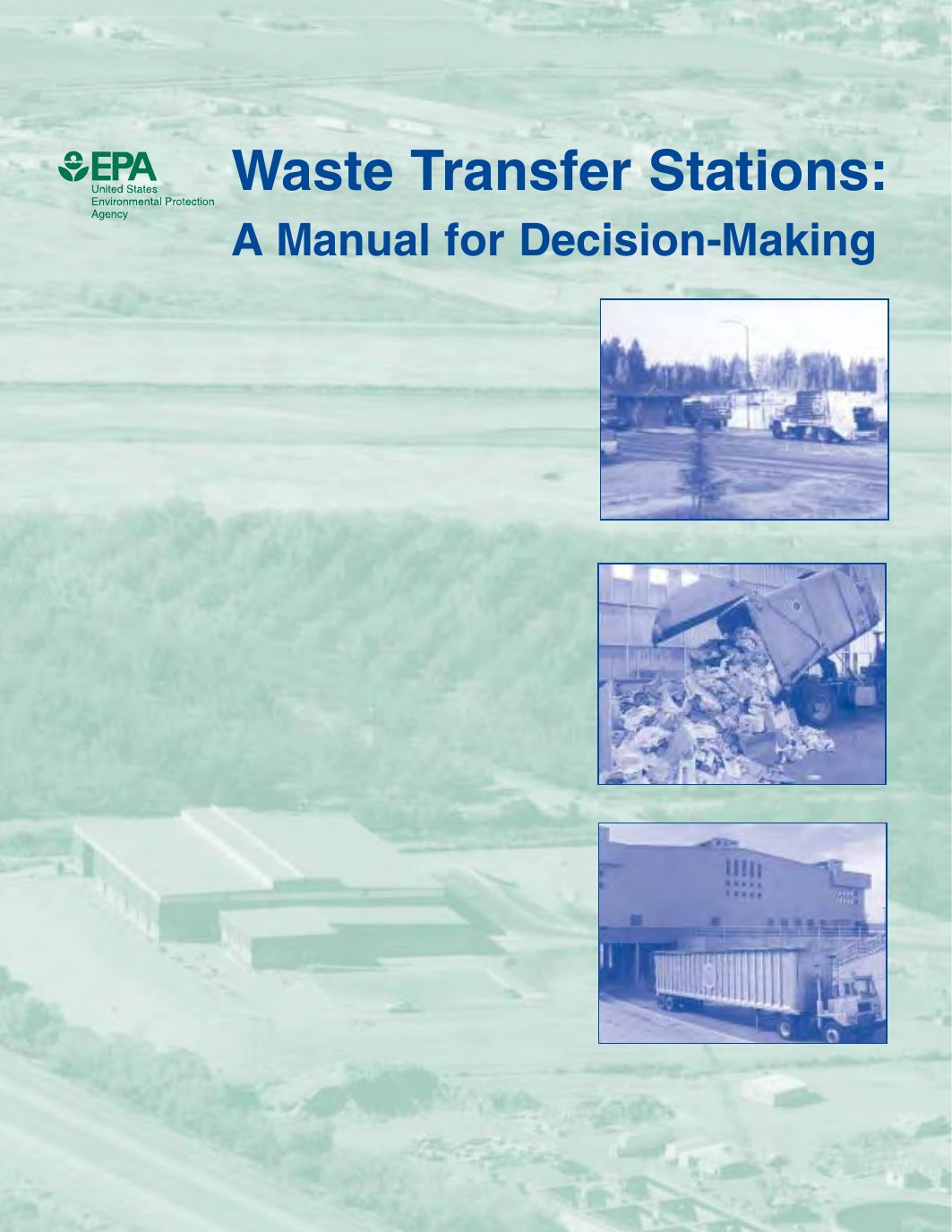
Waste Transfer Stations:
A Manual for Decision-Making
[Page 2]
Acknowledgments
he Office of Solid Waste (OSW) would like to acknowledge and thank the members
of the Solid Waste Association of North America Focus Group and the National
Environmental Justice Advisory Council Waste Transfer Station Working Group for
Treviewing and providing comments on this draft document. We would also like to
thank Keith Gordon of Weaver Boos & Gordon, Inc., for providing a technical
review and donating several of the photographs included in this document.
Acknowledgements i
[Page 3]
Contents
Acknowledgments. . . . . . . . . . . . . . . . . . . . . . . . . . . . . . . . . . . . . . . . . . . . . . . . . . . . . . i
Introduction . . . . . . . . . . . . . . . . . . . . . . . . . . . . . . . . . . . . . . . . . . . . . . . . . . . . . . . . . . . 1
What Are Waste Transfer Stations?. . . . . . . . . . . . . . . . . . . . . . . . . . . . . . . . . . . . . . . . . . . . . . . . . . 1
Why Are Waste Transfer Stations Needed? . . . . . . . . . . . . . . . . . . . . . . . . . . . . . . . . . . . . . . . . . . . 2
Why Use Waste Transfer Stations? . . . . . . . . . . . . . . . . . . . . . . . . . . . . . . . . . . . . . . . . . . . . . . . . . . 3
Is a Transfer Station Right for Your Community? . . . . . . . . . . . . . . . . . . . . . . . . . . . . . . . . . . . . . . . 4
Planning and Siting a Transfer Station . . . . . . . . . . . . . . . . . . . . . . . . . . . . . . . . . . . . . . . . 7
Types of Waste Accepted . . . . . . . . . . . . . . . . . . . . . . . . . . . . . . . . . . . . . . . . . . . . . . . . . . . . . . . . . 7
Unacceptable Wastes . . . . . . . . . . . . . . . . . . . . . . . . . . . . . . . . . . . . . . . . . . . . . . . . . . . . . . . . . . . . 7
Public Versus Commercial Use . . . . . . . . . . . . . . . . . . . . . . . . . . . . . . . . . . . . . . . . . . . . . . . . . . . . . 8
Determining Transfer Station Size and Capacity . . . . . . . . . . . . . . . . . . . . . . . . . . . . . . . . . . . . . . . 8
Number and Sizing of Transfer Stations . . . . . . . . . . . . . . . . . . . . . . . . . . . . . . . . . . . . . . . . . 10
Future Expansion . . . . . . . . . . . . . . . . . . . . . . . . . . . . . . . . . . . . . . . . . . . . . . . . . . . . . . . . . . . . 11
Site Selection . . . . . . . . . . . . . . . . . . . . . . . . . . . . . . . . . . . . . . . . . . . . . . . . . . . . . . . . . . . . . . . . . . 11
Environmental Justice Considerations . . . . . . . . . . . . . . . . . . . . . . . . . . . . . . . . . . . . . . . . . . . 11
The Siting Process and Public Involvement . . . . . . . . . . . . . . . . . . . . . . . . . . . . . . . . . . . . . . . . . . 11
Siting Criteria . . . . . . . . . . . . . . . . . . . . . . . . . . . . . . . . . . . . . . . . . . . . . . . . . . . . . . . . . . . . . . . . . . . 14
Exclusionary Siting Criteria . . . . . . . . . . . . . . . . . . . . . . . . . . . . . . . . . . . . . . . . . . . . . . . . . . . . 14
Technical Siting Criteria . . . . . . . . . . . . . . . . . . . . . . . . . . . . . . . . . . . . . . . . . . . . . . . . . . . . . . . 15
Developing Community-Specific Criteria . . . . . . . . . . . . . . . . . . . . . . . . . . . . . . . . . . . . . . . . 17
Applying the Committee’s Criteria . . . . . . . . . . . . . . . . . . . . . . . . . . . . . . . . . . . . . . . . . . . . . 18
Host Community Agreements . . . . . . . . . . . . . . . . . . . . . . . . . . . . . . . . . . . . . . . . . . . . . . . . . 18
Transfer Station Design and Operation . . . . . . . . . . . . . . . . . . . . . . . . . . . . . . . . . . . . . . 21
Transfer Station Design . . . . . . . . . . . . . . . . . . . . . . . . . . . . . . . . . . . . . . . . . . . . . . . . . . . . . . . . . . 21
How Will the Transfer Station Be Used? . . . . . . . . . . . . . . . . . . . . . . . . . . . . . . . . . . . . . . . . . 21
Site Design Plan . . . . . . . . . . . . . . . . . . . . . . . . . . . . . . . . . . . . . . . . . . . . . . . . . . . . . . . . . . . . . 21
Main Transfer Area Design . . . . . . . . . . . . . . . . . . . . . . . . . . . . . . . . . . . . . . . . . . . . . . . . . . . . 22
Types of Vehicles That Use a Transfer Station . . . . . . . . . . . . . . . . . . . . . . . . . . . . . . . . . . . . 23
Transfer Technology . . . . . . . . . . . . . . . . . . . . . . . . . . . . . . . . . . . . . . . . . . . . . . . . . . . . . . . . . 25
Transfer Station Operations . . . . . . . . . . . . . . . . . . . . . . . . . . . . . . . . . . . . . . . . . . . . . . . . . . . . . . . 27
Operations and Maintenance Plans. . . . . . . . . . . . . . . . . . . . . . . . . . . . . . . . . . . . . . . . . . . . . 27
Facility Operating Hours . . . . . . . . . . . . . . . . . . . . . . . . . . . . . . . . . . . . . . . . . . . . . . . . . . . . . . 32
Interacting With the Public . . . . . . . . . . . . . . . . . . . . . . . . . . . . . . . . . . . . . . . . . . . . . . . . . . . . 33
Waste Screening . . . . . . . . . . . . . . . . . . . . . . . . . . . . . . . . . . . . . . . . . . . . . . . . . . . . . . . . . . . . 33
Emergency Situations . . . . . . . . . . . . . . . . . . . . . . . . . . . . . . . . . . . . . . . . . . . . . . . . . . . . . . . . 34
Recordkeeping . . . . . . . . . . . . . . . . . . . . . . . . . . . . . . . . . . . . . . . . . . . . . . . . . . . . . . . . . . . . . . 35
Environmental Issues. . . . . . . . . . . . . . . . . . . . . . . . . . . . . . . . . . . . . . . . . . . . . . . . . . . . . . . . . . . . . 37
Traffic . . . . . . . . . . . . . . . . . . . . . . . . . . . . . . . . . . . . . . . . . . . . . . . . . . . . . . . . . . . . . . . . . . . . . 38
Noise . . . . . . . . . . . . . . . . . . . . . . . . . . . . . . . . . . . . . . . . . . . . . . . . . . . . . . . . . . . . . . . . . . . . . 39
Odors . . . . . . . . . . . . . . . . . . . . . . . . . . . . . . . . . . . . . . . . . . . . . . . . . . . . . . . . . . . . . . . . . . . . . 40
Contents iii
[Page 4]
Air Emissions . . . . . . . . . . . . . . . . . . . . . . . . . . . . . . . . . . . . . . . . . . . . . . . . . . . . . . . . . . . . . . . 41
Storm Water Quality . . . . . . . . . . . . . . . . . . . . . . . . . . . . . . . . . . . . . . . . . . . . . . . . . . . . . . . . . 41
Vectors . . . . . . . . . . . . . . . . . . . . . . . . . . . . . . . . . . . . . . . . . . . . . . . . . . . . . . . . . . . . . . . . . . . . 43
Litter . . . . . . . . . . . . . . . . . . . . . . . . . . . . . . . . . . . . . . . . . . . . . . . . . . . . . . . . . . . . . . . . . . . . . . 43
Safety Issues . . . . . . . . . . . . . . . . . . . . . . . . . . . . . . . . . . . . . . . . . . . . . . . . . . . . . . . . . . . . . . . . . . . 44
Exposure to Potentially Hazardous Equipment. . . . . . . . . . . . . . . . . . . . . . . . . . . . . . . . . . . . 45
Personal Protective Equipment . . . . . . . . . . . . . . . . . . . . . . . . . . . . . . . . . . . . . . . . . . . . . . . . 45
Exposure to Extreme Temperatures . . . . . . . . . . . . . . . . . . . . . . . . . . . . . . . . . . . . . . . . . . . . 45
Traffic . . . . . . . . . . . . . . . . . . . . . . . . . . . . . . . . . . . . . . . . . . . . . . . . . . . . . . . . . . . . . . . . . . . . . 45
Falls . . . . . . . . . . . . . . . . . . . . . . . . . . . . . . . . . . . . . . . . . . . . . . . . . . . . . . . . . . . . . . . . . . . . . . . 46
Noise . . . . . . . . . . . . . . . . . . . . . . . . . . . . . . . . . . . . . . . . . . . . . . . . . . . . . . . . . . . . . . . . . . . . . 47
Air Quality . . . . . . . . . . . . . . . . . . . . . . . . . . . . . . . . . . . . . . . . . . . . . . . . . . . . . . . . . . . . . . . . . 47
Hazardous Wastes and Materials . . . . . . . . . . . . . . . . . . . . . . . . . . . . . . . . . . . . . . . . . . . . . . 48
Ergonomics. . . . . . . . . . . . . . . . . . . . . . . . . . . . . . . . . . . . . . . . . . . . . . . . . . . . . . . . . . . . . . . . . 48
Facility Oversight . . . . . . . . . . . . . . . . . . . . . . . . . . . . . . . . . . . . . . . . . . . . . . . . . . . . . . 49
Applicable Regulations . . . . . . . . . . . . . . . . . . . . . . . . . . . . . . . . . . . . . . . . . . . . . . . . . . . . . . . . . . . 49
Federal Regulations . . . . . . . . . . . . . . . . . . . . . . . . . . . . . . . . . . . . . . . . . . . . . . . . . . . . . . . . . . 49
State Regulations . . . . . . . . . . . . . . . . . . . . . . . . . . . . . . . . . . . . . . . . . . . . . . . . . . . . . . . . . . . . 49
Local Regulations . . . . . . . . . . . . . . . . . . . . . . . . . . . . . . . . . . . . . . . . . . . . . . . . . . . . . . . . . . . . 49
Common Regulatory Compliance Methods . . . . . . . . . . . . . . . . . . . . . . . . . . . . . . . . . . . . . . . . . 50
Compliance Inspections . . . . . . . . . . . . . . . . . . . . . . . . . . . . . . . . . . . . . . . . . . . . . . . . . . . . . . 50
Reporting . . . . . . . . . . . . . . . . . . . . . . . . . . . . . . . . . . . . . . . . . . . . . . . . . . . . . . . . . . . . . . . . . . 50
Resources . . . . . . . . . . . . . . . . . . . . . . . . . . . . . . . . . . . . . . . . . . . . . . . . . . . . . . . . . . . 51
Glossary of Terms and Acronyms . . . . . . . . . . . . . . . . . . . . . . . . . . . . . . . . . . . . . . . . . . 53
Appendix. . . . . . . . . . . . . . . . . . . . . . . . . . . . . . . . . . . . . . . . . . . . . . . . . . . . . . . . . . . . A-1
iv Contents
[Page 5]
Introduction
his manual defines what a transfer In response in to this report, EPA has devel-
station is and how it relates to oped this manual and its companion publica-
municipal solid waste management tion Waste Transfer Stations: Involved Citizens
Tin the context of a community’s Make the Difference (EPA530-K-01-003).
total waste management plan. The The intent of this manual is to promote the
manual identifies issues and factors to consid- use of best practices in transfer station siting,
er when deciding to build a transfer station, design, and operation to maximize facilities’
planning and designing it, selecting a site, and effectiveness and efficiency, while minimizing
involving the community. their impact on the community. It is designed
In many communities, citizens have voiced to assist facility owners and operators; state,
concerns about solid waste transfer stations local, and tribal environmental managers; and
that are poorly sited, designed, or operated. In the public evaluate and choose protective
addition, some citizens might feel that transfer practices for siting, designing, and operation
stations are disproportionately concentrated in of municipal solid waste transfer stations. The
or near their communities. Yet transfer sta- manual is divided into the following chapters:
tions play an important role in a community’s Planning and Siting a Transfer Station
waste management system.
In 1993, the National Environmental Justice Transfer Station Design and Operations
Advisory Council (NEJAC) was formed to Facility Oversight
“provide independent advice, consultation,
and recommendations to EPA on matters relat- What Are Waste Transfer Stations?
ed to environmental justice.” The Waste and Waste transfer stations play an important role
Facility Siting Subcommittee, one of NEJAC's in a community’s total waste management
six subcommittees, received numerous com- system, serving as the link between a commu-
ments from citizens of several major metropol-
itan areas concerning the negative impacts of
waste transfer stations and their dispropor-
tionate siting in low-income communities and
communities of color. The Subcommittee, with
support from EPA, formed the Waste Transfer
Station Working Group in 1998 to investigate
these comments. The Working Group
arranged two fact-finding sessions in New
York City and Washington, DC, during
November 1998 and February 1999 respective-
ly. These sessions were each two-day events
consisting of a day of tours of area waste
transfer stations and a second day of public
meetings. Based upon these two fact-finding
sessions, the Working Group in March 2000
published the draft report, A Regulatory
Strategy for Siting and Operating Waste Transfer
Stations. This report made several recommen-
dations to EPA concerning proper and equi-
table siting and operation of transfer stations. Aerial view of a totally enclosed transfer station.
Introduction 1
[Page 6]
nity’s solid waste collection program and a ties have installed full-service operations that
final waste disposal facility. While facility provide public waste and recyclables drop-off
ownership, sizes, and services offered vary accommodations on the same site as their
significantly among transfer stations, they all transfer stations.
serve the same basic purpose—consolidating Source reduction and recycling also play an
waste from multiple collection vehicles into integral role in a community’s total waste
larger, high-volume transfer vehicles for more management system. These two activities can
economical shipment to distant disposal sites. significantly reduce the weight and volume of
In its simplest form, a transfer station is a waste materials requiring disposal, which
facility with a designated receiving area where reduces transportation, landfill, and incinera-
waste collection vehicles discharge their loads. tor costs. Source reduction consists of reduc-
The waste is often compacted, then loaded ing waste at the source by changing product
into larger vehicles (usually transfer trailers, design, manufacturing processes, and pur-
but intermodal containers, railcars, and barges chasing and sales practices to reduce the
are also used) for long-haul shipment to a quantity or toxicity of materials before they
final disposal site—typically a landfill, waste- reach the waste stream. U.S. Environmental
to-energy plant, or a composting facility. No Protection Agency (EPA) policy promotes
long-term storage of waste occurs at a transfer source reduction as the waste management
station; waste is quickly consolidated and technique of choice.
loaded into a larger vehicle and moved off
site, usually in a matter of hours. Recycling—the collection, processing, and
For purposes of this manual, facilities serv- manufacture of new products—likewise
ing only as citizen drop-off stations or com- diverts materials from the landfill or incinera-
munity convenience centers are not tor. These recyclable materials are prepared for
considered waste transfer stations. Only a shipment to markets in a special facility called
facility that receives some portion of its waste a MRF, which stands for materials recovery
directly from collection vehicles, then consoli- facility. A MRF is simply a special type of
dates and reloads the waste onto larger vehi- transfer station that separates, processes, and
cles for delivery to a final disposal facility, is consolidates recyclable materials for shipment
considered a transfer station. A convenience to one or more recovery facilities rather than a
center, on the other hand, is a designated area landfill or other disposal site. Consequently,
where residents manually discard waste and the concepts and practices in this manual can
recyclables into dumpsters or collection con- be applied to MRFs as well.
tainers. These containers are periodically Aggressive community source reduction
removed or emptied, and the waste is trans- and recycling programs can substantially
ported to the appropriate disposal site (or pos- reduce the amount of waste destined for long
sibly to a transfer station first). Convenience haul transfer and disposal. If these reductions
centers are not suitable for use as transfer sta- are significant enough, a community may find
tions because they cannot readily handle the that fewer or smaller transfer stations can
large volume of waste that is discharged by a meet its needs.
self-unloading collection truck. While these
sites are not considered transfer stations with- Why Are Waste Transfer Stations
in the context of this manual, it is important to Needed?
note that heavily used convenience centers can The nationwide trend in solid waste disposal
face similar concerns as transfer stations (e.g., has been toward construction of larger, more
litter, road access, vehicle queuing, storm remote, regional landfills. Economic consid-
water run on and run off). Consequently, it erations, heavily influenced by regulatory
may be appropriate to consider implementing and social forces, are compelling factors
some of the concepts and practices advocated leading to this result. The passage of federal
in this manual at these sites. Many communi- criteria in 1991 established new design
2 Introduction
[Page 7]
requirements for municipal solid waste land- Figure 1.
fills. These new standards include design, Sample Comparison of Hauling Costs With
operating, and monitoring requirements that and Without a Transfer Station
significantly add to construction, operating, $30
closure, and post-closure monitoring costs.
As older landfills near urban centers reach
capacity and begin closing, cities must $25 Haul cost without
decide whether to construct new landfills or transfer station
to seek other disposal options. Many com-
munities find the cost of upgrading existing
facilities or constructing new landfills to be $20
prohibitively high, and opt to close existing “Break even” point
facilities. For these communities, transferring
waste to a large regional landfill is an $15
appealing alternative. Haul cost with
transfer station
In addition to regulatory requirements, $10
public opposition frequently makes siting new
landfills near population centers difficult. The Transfer station
current atmosphere is such that gaining public capital, operating,
and political approval for constructing new $5 and maintenance
disposal capacity near population centers is cost
challenging. Also, adequate land is often not
available near densely populated or urban $0
areas. These social, political, and geographical 0102030405060
factors have further stimulated the rise in con- Round-trip Distance from Waste Source to Disposal, miles
struction of large, remote, regional landfills.
Economic considerations, especially The following assumptions were used to create this sample comparison:
economies of scale, further promote develop- Cost to build, own, and operate transfer station—dollars per ton $10
Average payload of collection truck hauling directly to landfill—tons 7
ment of large regional facilities. To offset the Average payload of transfer truck hauling from transfer station
high cost of constructing and maintaining a to landfill—tons 21
modern landfill, facility owners construct Average trucking cost (direct or transfer hauling)—dollars per mile $3
large facilities that attract high volumes of
waste from a greater geographic area. By The comparison shows a break-even distance of about 35 miles (round-trip).
maintaining a high volume of incoming waste, In other words, for this example, using a transfer station is cost-effective when
landfill owners can keep the per-ton tipping the round-trip distance exceeds 35 miles. When the round-trip distance is less
fees low, which subsequently attracts more than 35 miles, direct haul is more cost-effective. Although the same economic
business. Rural and urban communities alike principles apply, break-even distances will vary in different situations based on
are finding that the most economically viable the site-specific input data.
solution to their waste disposal needs is ship- lection crews to spend less time traveling to
ping their waste to these facilities. In these cir- and from distant disposal sites and more time
cumstances, a transfer station serves as the collecting waste. This also reduces fuel con-
critical consolidation link in making cost-effec- sumption and collection vehicle maintenance
tive shipments to these distant facilities. costs, plus produces less overall traffic, air
Why Use Waste Transfer Stations? emissions, and road wear.
The primary reason for using a transfer station In addition, a transfer station also provides:
is to reduce the cost of transporting waste to An opportunity to screen waste prior to dis-
disposal facilities. Consolidating smaller loads posal.
from collection vehicles into larger transfer
vehicles reduces hauling costs by enabling col-
Introduction 3
[Page 8]
Flexibility in selecting waste disposal protective disposal sites, even if they are more
options. distant. They can consider multiple disposal
An opportunity to serve as a convenience facilities, secure competitive disposal fees, and
center for public use. choose a desired method of disposal (e.g.,
landfilling or incineration).
At many transfer stations, workers screen Finally, transfer stations often include con-
incoming wastes on conveyor systems, tipping venience centers open to public use. These cen-
floors, or in receiving pits. Waste screening has ters enable individual citizens to deliver waste
two components: separating recyclables from directly to the transfer station facility for ulti-
the waste stream and identifying any wastes mate disposal. Some convenience centers offer
that might be inappropriate for disposal (e.g., programs to manage yard waste, bulky items,
hazardous wastes or materials, white goods, household hazardous waste, and recyclables.
whole tires, auto batteries, or infectious waste). These multipurpose convenience centers are
Identifying and removing recyclables reduces assets to the community because they assist in
the weight and volume of waste sent for final achieving recycling goals, increase the public’s
disposal and, depending on local recycling knowledge of proper materials management,
markets, might generate revenue. Screening for and divert materials that would otherwise bur-
inappropriate wastes is more efficient at the den existing disposal capacity.
transfer station than the landfill.
Waste transfer stations also offer more flexi- Is a Transfer Station Right for
bility in terms of disposal options. Decision- Your Community?This is the opening portion of a long document. Use Download complete plain text above for the full extracted transcript.